

Architecture Patterns Every DevOps Engineer Should Know

Every DevOps engineer eventually reaches a point where learning another tool is not enough. The real growth begins when you understand how systems fit together. Architecture patterns are the language of that understanding. They describe how software is structured, deployed, and operated so that it can evolve, scale, and recover.
In this article, we explore the architecture patterns that every DevOps engineer should know. You will learn what each pattern does best, where it fails, and how to measure success. A real case study demonstrates the transformation of a legacy system using these concepts. By the end, you will know how to choose the right pattern for your environment and how to avoid common mistakes that cost teams time and money.
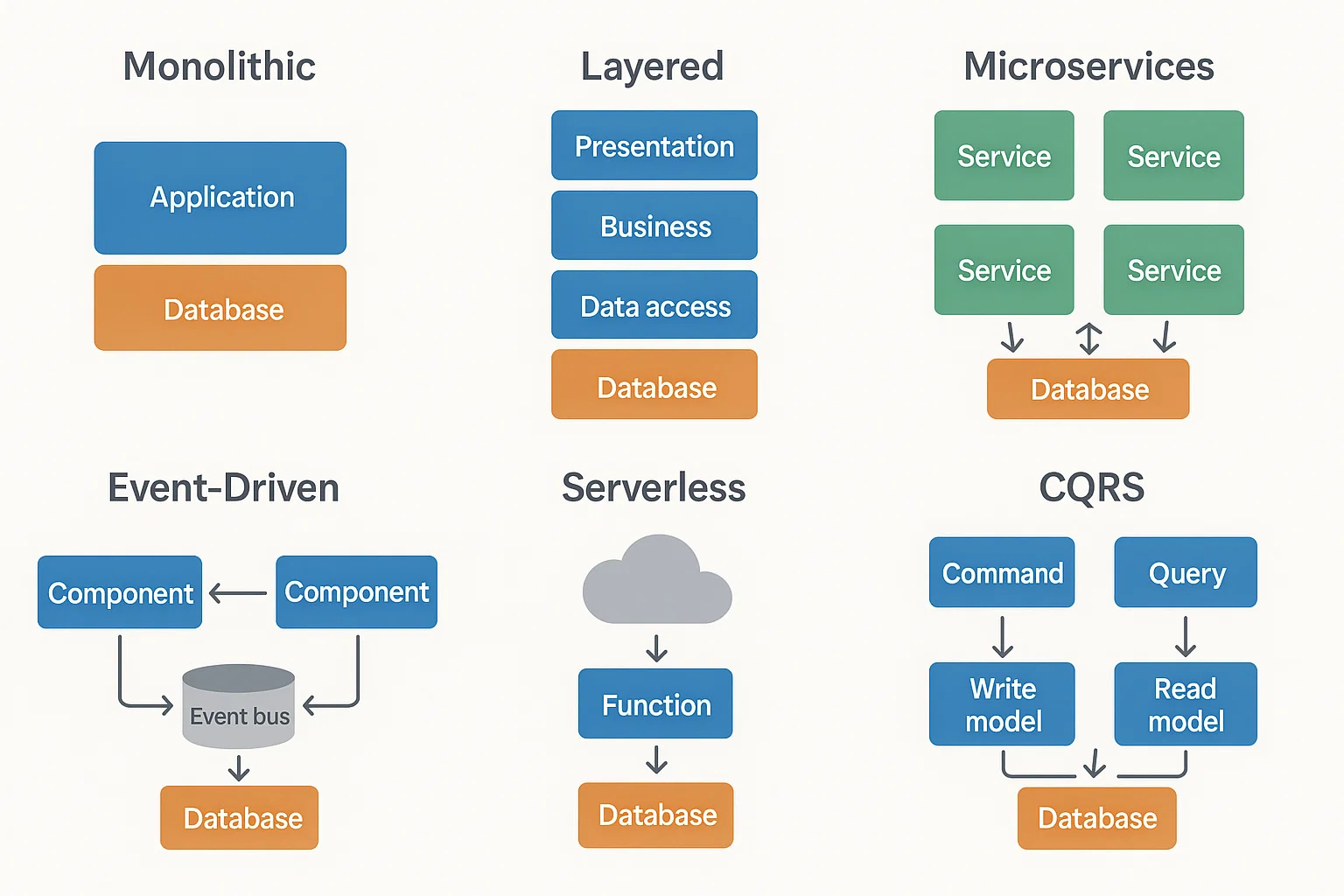
The Three Types of Patterns
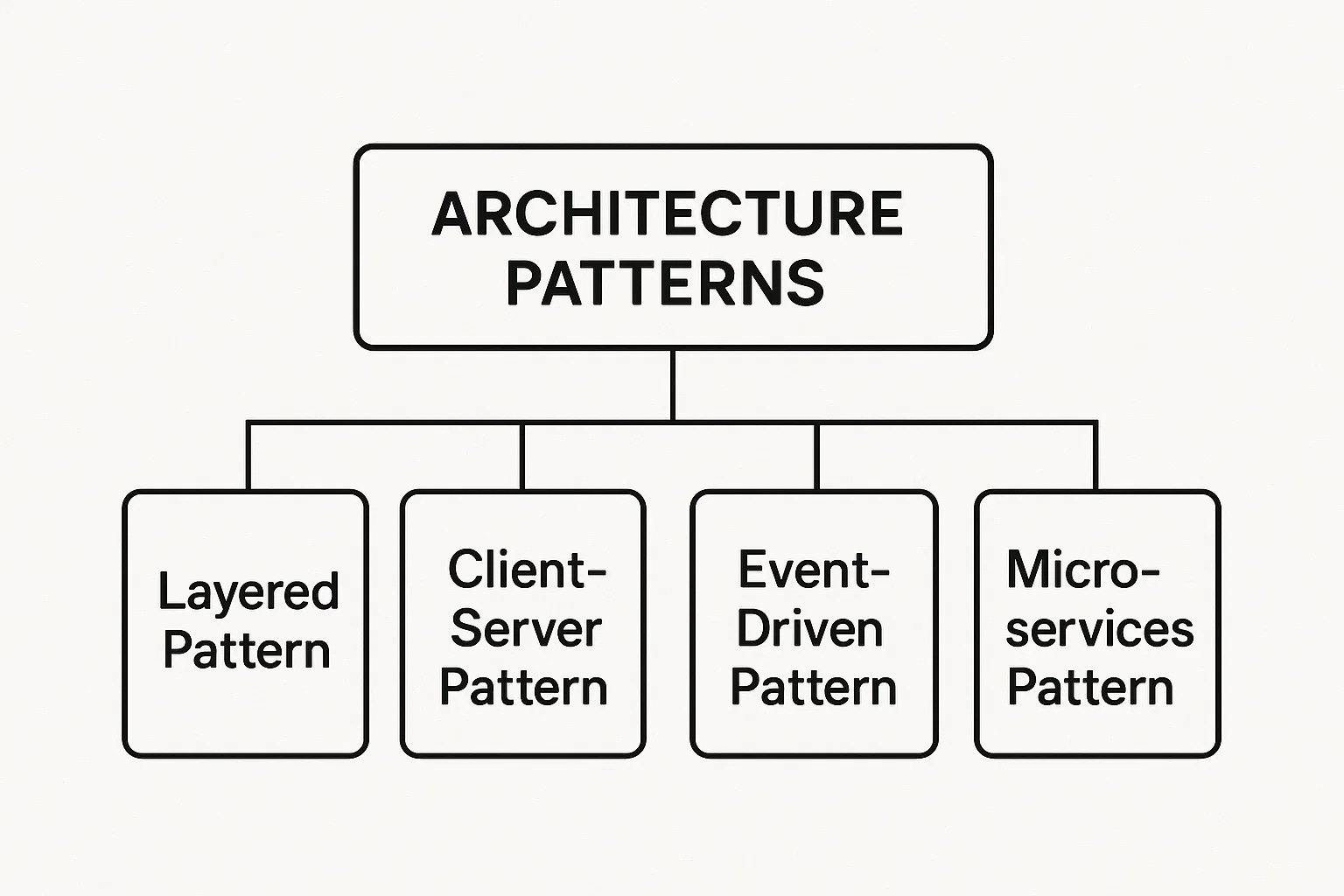
Before diving in, it is important to understand the hierarchy of patterns you will encounter.
Architectural Styles: Define how the entire system is structured, such as Monolithic, Micro-services, or Serverless.
Migration Strategies: Define how systems evolve over time, such as the Strangler Fig pattern.
Implementation Patterns: Define tactical approaches within architectures, such as CQRS and Event Sourcing.
Recognizing which category a pattern belongs to helps you apply it correctly.
Comparison Table of Key Patterns
Pattern 1: Monolithic Architecture
Overview: A monolithic architecture keeps all functionality: user interface, business logic, and database access, within a single deployable unit. It is simple to build, easy to deploy, and great for small teams.
When to Use:
Early-stage projects that prioritize speed over scale.
Small teams (1-10 developers).
Applications where most features change together.
Key Benefits:
Simple deployment pipeline.
Easier debugging due to a single codebase.
Trade-offs:
Hard to scale individual components.
Any change requires full redeployment.
Success Criteria:
Deployment time under 10 minutes.
Codebase under 500K lines.
Fewer than 5 tightly coupled modules.
Common Mistakes:
Assuming you can refactor later without cost.
Neglecting automated testing.
Pattern 2: Layered (N-Tier) Architecture
Overview: Layered architecture separates presentation, logic, and data access into distinct layers. It remains the backbone of many enterprise applications.
When to Use:
Projects where separation of concerns helps maintainability.
Teams that work on different application layers.
Key Benefits:
Organized code with clear boundaries.
Easier onboarding for new engineers.
Trade-offs:
Latency increases with each layer.
Slow delivery if coordination between teams is weak.
Success Criteria:
Deployment time under 15 minutes.
Each layer has fewer than 3 dependencies on adjacent layers.
Build time under 10 minutes.
Layer test coverage above 70%.
Common Mistakes:
Over-engineering small systems with too many layers.
Creating artificial barriers between teams.
Pattern 3: Microservices Architecture
Overview: Micro-services break an application into small, independently deployable services. Each service owns its data and can scale independently. This pattern aligns closely with DevOps because it encourages automation, observability, and continuous delivery.
When to Use:
Systems with multiple teams working independently.
Applications needing to deploy daily or hourly.
Large or fast-growing user bases.
Key Benefits:
Faster deployments and fault isolation.
Team autonomy.
Technology diversity across services.
Trade-offs:
Requires mature CI/CD, tracing, and orchestration.
More complex data management.
Success Criteria:
Service deployment time under 2 minutes.
Each service has its own repository and pipeline.
Cross-service latency below 50 ms.
Error budget breaches below 0.1 % per month.
When Not to Use:
Teams with fewer than 10 engineers.
Systems with low deployment frequency.
Organizations without CI/CD or observability.
Common Mistakes:
Creating too many tiny services.
Ignoring distributed tracing and monitoring.
(Placeholder: diagram comparing monolith vs microservices scaling.)
Pattern 4: Event-Driven Architecture
Overview: An event-driven system relies on producers emitting events and consumers reacting asynchronously. It decouples components and improves resilience.
When to Use:
Real-time systems such as IoT, analytics, or streaming.
Workloads with variable spikes in activity.
Key Benefits:
High scalability and flexibility.
Enables replay and audit via event logs.
Trade-offs:
Difficult to trace end-to-end workflows.
Requires strong monitoring for lag and retries.
Success Criteria:
Latency under 500 ms per event flow.
Queue backlog under 1,000 messages.
No messages unprocessed for over 5 minutes.
Common Mistakes:
Using synchronous APIs inside event flows.
No dead-letter queue or monitoring.
Tools:
Pattern 5: Serverless / Function-as-a-Service
Overview: Serverless architecture executes functions on demand without managing servers. Platforms handle scaling and billing automatically.
When to Use:
Unpredictable workloads.
Event-based systems or short tasks.
Teams seeking minimal infrastructure overhead.
Key Benefits:
Pay only for what you use.
Instant scalability.
Minimal maintenance.
Trade-offs:
Cold-start latency.
Debugging and vendor lock-in.
Success Criteria:
Function execution time under 3 seconds.
Cold start under 500 ms.
Cost per million invocations documented (< $2 typical).
Tools:
Pattern 6: Strangler Fig (Migration Strategy)
Overview: This pattern allows gradual replacement of a legacy system by routing traffic from old to new modules. It reduces migration risk and downtime.
When to Use:
Modernizing large monoliths that cannot be rewritten at once.
Teams needing to release new features without halting existing systems.
Key Benefits:
Incremental modernization.
Reduced downtime.
Controlled risk.
Trade-offs:
Running dual systems temporarily increases cost.
Requires careful routing and monitoring.
Success Criteria:
Legacy code reduced by 30 % within 12 months.
Zero downtime during transitions.
New system handling over 60 % of traffic within 18 months.
Common Mistakes:
No clear cut-off plan for the old system.
Migrating without observability.
Pattern 7: CQRS + Event Sourcing
Overview: Command Query Responsibility Segregation (CQRS) separates read and write operations, while Event Sourcing stores every state change as an immutable event log.
When to Use:
Systems requiring audit trails and historical state reconstruction.
High-volume transactional systems with different read/write scales.
Key Benefits:
Full auditability.
Replayable history for debugging and analytics.
Independent scaling for reads and writes.
Trade-offs:
Added complexity and eventual consistency.
Storage overhead.
Success Criteria:
Write latency under 100 ms.
Read scaling independent of writes.
Event replay completes within 2 hours for full rebuild.
Storage growth under 20 % annually.
Common Mistakes:
Using CQRS for simple CRUD systems.
Ignoring event versioning.
Tools:
Axon Framework
Tools by Pattern
Common Mistakes and Troubleshooting
How to Choose the Right Pattern
Use a simple scoring framework to evaluate your system. Rate each factor 1–5.
Total Score:
5–10 ➡️ Monolithic or Layered
11–15 ➡️ Layered or selective Microservices
16–20 ➡️ Microservices + Event-Driven
21–25 ➡️ Distributed Microservices + CQRS
Architect Your Value
If you manage DevOps pipelines or infrastructure, understanding architecture patterns is not optional, it is part of your value as an engineer.
Next steps:
Audit your system architecture and identify its current style.
Match recurring pain points to the patterns above.
Select one improvement project this quarter — such as introducing event-driven notifications or experimenting with serverless jobs.
Document results and share lessons with your team.
Continue refining architecture alongside your CI/CD and observability practices.
Architecture is never finished. It is a living system that evolves as your product, people, and scale evolve.
Final Thoughts
DevOps is not just automation, it’s architecture in motion. The patterns described here, from monoliths to micro-services, event-driven systems, and serverless computing, define how we build resilient, observable, and scalable systems in 2025.
The best DevOps engineers understand both code and structure. They can explain not only how to deploy but why the system behaves the way it does. Master these patterns, apply them intentionally, measure success, and you will build systems that survive growth, failure, and change.
Start with one pattern. Practice it. Learn from it. ❤️
References
Microsoft Azure Architecture Center (2025)
Martin Fowler – Patterns of Enterprise Application Architecture
Building Microservices by Sam Newman, 2nd Edition, 2021
Last Updated: November 2025